Cantilever Logo
    Home
    Features
    Blogs
    About Us
    Log In
    Career

    The 2026 Forward Deployed Software Engineer Roadmap: From Backend Developer to High-Impact Client Deployments

    12 min read
    Jul 12, 2026
    The 2026 Forward Deployed Software Engineer Roadmap: From Backend Developer to High-Impact Client Deployments

    The 2026 Forward Deployed Engineer Landscape: Compensation, Demand, and Role Definition

    The role of a Forward Deployed Engineer (FDE) has become increasingly crucial in the tech industry, particularly for companies that require client-facing engineering, custom deployment, and product adaptation. As a data-focused tech analyst, it is essential to understand the core responsibilities of an FDE, the current compensation benchmarks, and the demand drivers in the market.

    Understanding the Core FDE Role

    A Forward Deployed Engineer is primarily responsible for client-facing engineering, custom deployment, and product adaptation. This role requires a unique blend of technical expertise and interpersonal skills, as FDEs work closely with clients to understand their needs and develop tailored solutions.

    Compensation Benchmarks

    The compensation for Forward Deployed Engineers varies significantly depending on the employer, location, and level of experience. According to recent reports, the median total compensation for an FDE at Palantir is around $215,000 Perspective AI. In contrast, Anthropic's principal-level applied AI engineer can earn over $1.2 million. C3.ai's Forward Deployed Engineer total compensation is estimated to be between $125K and $244K.

    Demand Drivers

    The demand for Forward Deployed Engineers is driven by several factors, including the increasing adoption of hybrid cloud, AI/ML deployment, and real-time data systems. As companies continue to invest in these areas, the need for skilled FDEs who can design, deploy, and manage these systems will only continue to grow.

    Compensation Comparison

    EmployerTotal CompensationEquity BreakdownIllustrative India Range
    Palantir$215K55-70%₹18-25 LPA (~$22,000-$30,000 USD)
    C3.ai$125-244K40-60%₹10-20 LPA (~$12,000-$24,000 USD)
    Anthropic$1.2M+70-80%₹80-120 LPA (~$100,000-$140,000 USD)

    The table highlights the significant variation in compensation ranges for Forward Deployed Engineers across top employers. The Indian equivalent ranges are also provided to give a better understanding of the salary ranges in the Indian context. The role of a Forward Deployed Engineer is critical in the tech industry, and the compensation benchmarks vary significantly depending on the employer and location. As the demand for skilled FDEs continues to grow, it is essential for professionals in this field to stay informed about the market trends and compensation ranges.

    A stylized tech workspace showing four forward deployed engineers collaborating around a digital whiteboard that displays a glowing compensation curve and a demand heatmap, with a salary chart icon floating above their laptops. - illustration
    A stylized tech workspace showing four forward deployed engineers collaborating around a digital whiteboard that displays a glowing compensation curve and a demand heatmap, with a salary chart icon floating above their laptops. - illustration

    Breaking Down Deployment Bottlenecks: On-Prem, Cloud, and Hybrid Strategies in 2026

    As enterprises navigate the complexities of modern deployments, understanding the trade-offs between on-premises, cloud, and hybrid strategies is crucial. Industry trends suggest that hybrid and multi-cloud architectures will become the default enterprise strategy in 2026, with sensitive data and steady-state workloads staying on-premises and burstable and globally distributed workloads moving to the cloud sedai.io.

    On-Premises Deployment: Critical and Regulated Data

    On-premises deployment is preferred for critical or regulated data due to data residency and internal policy constraints. This approach ensures that sensitive information remains within the organization's control, complying with regulatory requirements and internal policies. For instance, organizations dealing with sensitive financial or healthcare data may opt for on-premises deployment to maintain data sovereignty.

    Cloud Deployment: Scalable and Less Sensitive Workloads

    In contrast, cloud deployment is often chosen for scalable and less sensitive workloads, providing the necessary infrastructure to handle burstable and globally distributed workloads. Cloud services offer on-demand scalability, reduced capital expenditures, and increased agility, making them an attractive option for organizations with dynamic workload requirements.

    Hybrid Multi-Cloud: The Best of Both Worlds

    Hybrid multi-cloud architectures offer the benefits of both on-premises and cloud deployments, allowing workloads to move between environments based on performance, cost, or operational needs. By adopting a hybrid approach, organizations can optimize their deployments, taking advantage of the strengths of each environment while minimizing their weaknesses.

    By understanding the trade-offs between on-premises, cloud, and hybrid multi-cloud architectures, organizations can make informed decisions about their deployment strategies, navigating the complex landscape of modern deployments and optimizing their infrastructure for success. As cloud repatriation becomes an optimization tactic, not a failure, enterprises must be able to navigate diverse deployment environments, making hybrid multi-cloud the default enterprise strategy in 2026 sedai.io.

    System Design Interviews for FDE Roles: Real-Time Systems, Sensor Fusion, and Data Pipelines

    As a forward deployed engineer (FDE), designing scalable and efficient systems is crucial. System design interviews for FDE roles at top companies like Anduril, Anthropic, and Palantir focus on assessing a candidate's ability to design and deploy complex systems. Key interview topics include real-time data ingestion, sensor fusion, geospatial systems, AI/ML pipelines, and distributed data pipelines.

    Real-Time Data Ingestion and Sensor Fusion

    Real-time data ingestion involves processing and analyzing data as it is generated. This is critical in applications such as surveillance, navigation, and predictive maintenance. Sensor fusion, a key aspect of real-time systems, combines data from multiple sensors to provide a more accurate and comprehensive view of the environment. For example, in autonomous vehicles, sensor fusion is used to combine data from cameras, radar, and lidar sensors.

    Distributed Data Pipelines

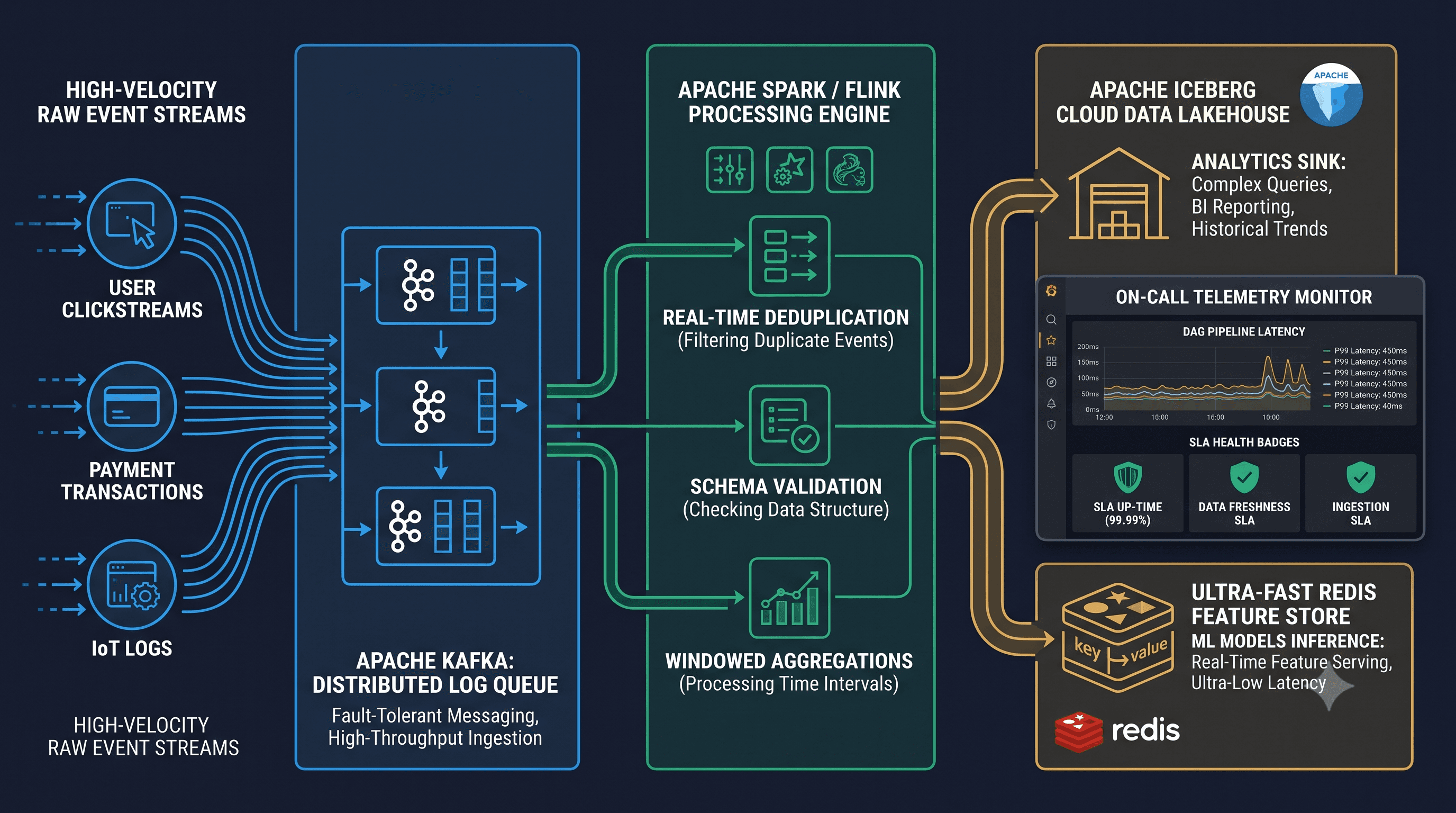
    Distributed data pipelines are a critical component of system design for FDE roles. These pipelines involve the ingestion, processing, and storage of large datasets. Key components of distributed data pipelines include data ingestion tools like Apache Kafka, batch processing frameworks like Apache Spark, and stream processing engines like Apache Flink. The Lambda architecture, which combines batch and speed layers, is a popular approach for building distributed data pipelines.

    AI/ML Pipelines and Geospatial Systems

    AI/ML pipelines involve the deployment of machine learning models in production environments. This requires a deep understanding of model serving, monitoring, and maintenance. Geospatial systems, which involve the processing and analysis of spatial data, are also critical in FDE roles. For example, in defense-tech applications, geospatial systems are used for mapping, tracking, and surveillance.

    Interview Focus: Defense-Tech, AI Labs, and Enterprise

    The focus of system design interviews varies across companies. Defense-tech companies like Anduril focus on real-time data ingestion, sensor fusion, and geospatial systems. AI labs like Anthropic focus on AI/ML pipelines and natural language processing. Enterprise companies like Palantir focus on distributed data pipelines and large-scale data integration.

    5-Stage Transition Path for Backend Engineers

    To become a successful FDE, backend engineers need to develop a range of skills and gain experience in various areas.

    5-Stage Transition Path from Backend Engineer to FDE

    1
    Skills

    Develop foundational skills in programming languages, data structures, and system design.

    2
    Projects

    Work on projects that involve real-time data ingestion, sensor fusion, and distributed data pipelines.

    3
    Interview Preparation

    Prepare for system design interviews by practicing design problems and reviewing system design concepts.

    4
    FDE Interview Loop

    Prepare for coding, system design, and client-facing problem-solving interviews.

    5
    First Deployment

    Deploy and maintain large-scale systems in production environments.

    By following this 5-stage transition path, backend engineers can develop the skills and expertise needed to succeed as FDEs.

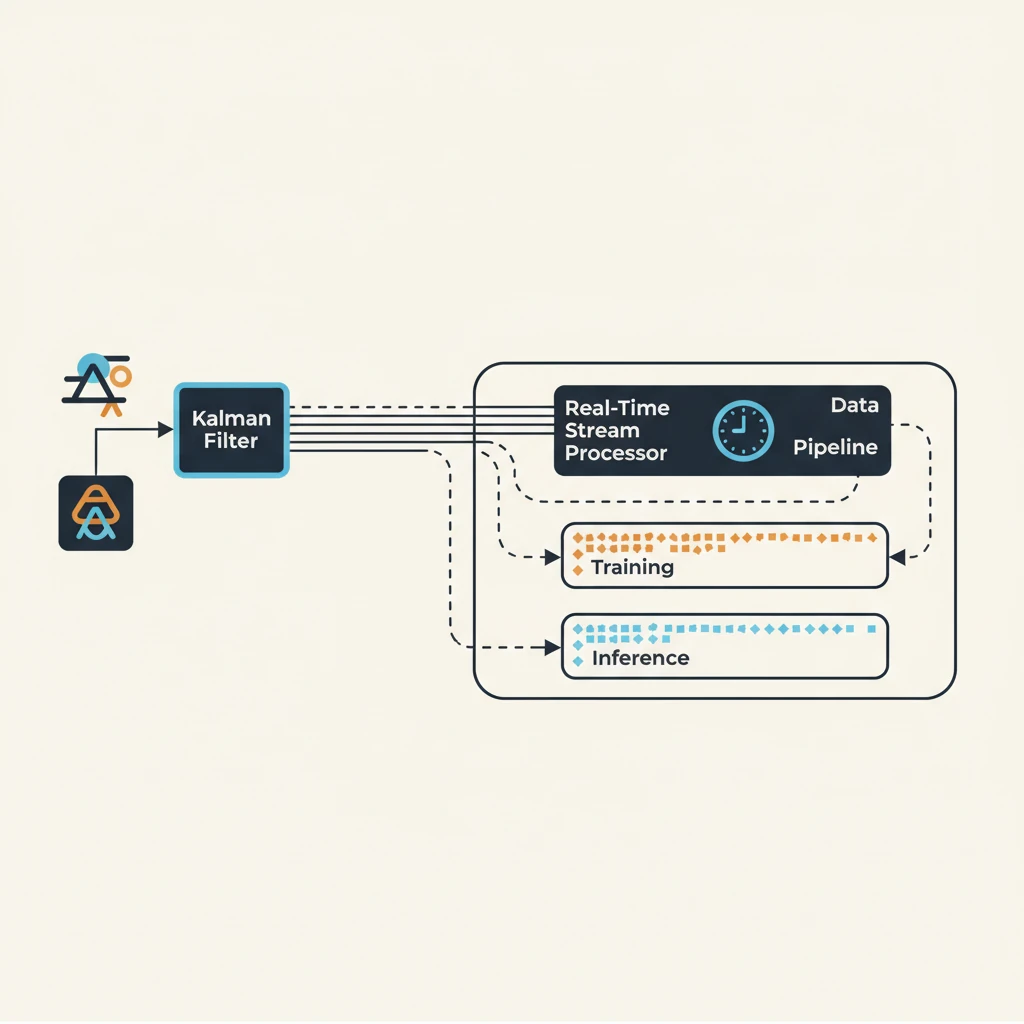
    A top-down system diagram of a real-time sensor fusion pipeline: raw sensor data enters a 'Kalman Filter' block, passes into a 'Real-Time Stream Processor' with a clock icon, then flows into a 'Data Pipeline' with parallel queues labeled 'Training' and 'Inference'. - illustration
    A top-down system diagram of a real-time sensor fusion pipeline: raw sensor data enters a 'Kalman Filter' block, passes into a 'Real-Time Stream Processor' with a clock icon, then flows into a 'Data Pipeline' with parallel queues labeled 'Training' and 'Inference'. - illustration

    Lessons from the Field: What Top FDEs Wish They Knew Earlier

    Seasoned Forward Deployed Engineers often share a common regret: they underestimated how much of the job revolves around client communication and problem framing rather than pure coding. One FDE who deployed a real-time sensor fusion system for a defense client recalled that the hardest part wasn't the Kafka-to-Spark pipeline—it was convincing the client’s ops team to trust a cloud-integrated hybrid solution when their security policy mandated an air-gapped on-prem deployment. Another FDE at a healthcare startup spent two weeks debugging a data ingestion issue that turned out to be a miscommunication about the expected schema format. These experiences highlight why top FDEs prioritize building domain knowledge in defense, healthcare, or finance early on. When you understand the client's regulatory language and operational constraints, you can frame technical trade-offs in terms they care about—cost, compliance, and latency—rather than just system throughput.

    Decision Criteria for Choosing Interview Preparation Focus

    When preparing for FDE interviews, it's essential to consider the focus areas of different industries, including defense-tech, enterprise, and AI labs.

    CriteriaDefense-TechEnterpriseAI Labs
    System Design FocusReal-time systems, sensor fusionScalable data pipelines, microservicesLarge-scale AI model deployment
    Compensation Range₹25–40 LPA (~$30,000–$50,000 USD)₹20–35 LPA (~$25,000–$45,000 USD)₹30–50 LPA (~$40,000–$65,000 USD)
    Work StyleHighly dynamic, project-basedStructured, with clear deliverablesInnovative, with emphasis on R&D

    By considering these factors, aspiring FDEs can make informed decisions about their interview preparation focus and set themselves up for success in careers that demand both technical depth and client-facing agility.

    Your 6-Month Roadmap: From Backend Developer to FDE Offer

    As a backend developer aiming for a Forward Deployed Engineer (FDE) role, it's essential to have a structured plan to acquire the necessary skills and experience. This roadmap outlines key milestones and focus areas for the next six months.

    Months 1-2: Deepening Backend Fundamentals and Distributed Systems

    The first two months should focus on strengthening backend fundamentals and understanding distributed systems. This includes:

    • Reviewing and mastering data structures and algorithms, particularly those relevant to backend development such as graph traversal, caching strategies, and load balancing
    • Gaining in-depth knowledge of distributed systems concepts, including CAP theorem, consensus algorithms (e.g. Raft, Paxos), and distributed storage solutions
    • Familiarizing oneself with cloud platforms (AWS, Azure, GCP) and their respective services for compute, storage, and networking

    Months 3-4: Building Portfolio with Deployment-Oriented Projects

    The next two months should be dedicated to building a portfolio of projects that demonstrate deployment-oriented skills. This can include:

    • Developing a real-time data pipeline using hybrid cloud services (e.g. AWS Glue, Azure Data Factory) to process and analyze data from various sources
    • Creating a microservices-based application using containerization (Docker) and orchestration (Kubernetes) to demonstrate scalability and maintainability
    • Showcasing expertise in infrastructure as code (IaC) using tools like Terraform or CloudFormation to automate infrastructure provisioning

    Month 5: Targeting FDE Interview Loops

    In the fifth month, the focus shifts to preparing for FDE interview loops, particularly at Indian offices of Palantir, C3.ai, and Anduril. This includes:

    • Reviewing system design concepts, including high-level design, data flow, and scalability considerations
    • Practicing coding challenges and whiteboarding exercises to improve problem-solving skills
    • Researching the companies and their products to understand their technology stack and business needs

    Month 6: Negotiating Offers and Leveraging Indian Placement Cycles

    In the final month, it's essential to be prepared to negotiate offers and leverage Indian placement cycles. This includes:

    • Understanding the compensation ranges for FDE roles at top companies, including equity-heavy compensation and Indian equivalent ranges
    • Researching the company culture and work environment to ensure alignment with personal goals and values
    • Being prepared to discuss and negotiate offer terms, including salary, equity, and benefits

    By following this roadmap and focusing on the key milestones and skills, backend developers can increase their chances of success in FDE interviews and secure offers from top companies.

    Test Your Readiness: FDE Knowledge Check and Next Steps

    Assess your understanding of the key trade-offs and data points that distinguish an FDE role. Answer these scenario-based questions to confirm you’re prepared for the interview stage:

    Knowledge Check

    A recruiter offers you a Forward Deployed Engineer role at Palantir with a $215K total compensation package. Based on 2026 market data, what percentage of that comp is likely equity?

    Knowledge Check

    A financial client requires customer transaction data to stay on-prem due to regulatory constraints, while their analytics dashboards need global scalability. What deployment strategy should you recommend?

    Knowledge Check

    You are preparing for an FDE interview at Anduril. Which system design topic is most critical to master?

    If you answered all three correctly, you’re ready to move forward with the 6-month roadmap. If not, review the sections on compensation, deployment strategies, and system design topics before diving into interview preparation.

    Frequently Asked Questions

    What is the realistic total compensation range for a Forward Deployed Engineer in 2026?

    Forward Deployed Engineer total compensation in 2026 varies widely by company and level. At the median, Palantir offers approximately $215K, while top-tier principal-level roles at companies like Anthropic can exceed $1.2M for applied AI engineers. A significant shift in 2026 is that equity now represents 55–70% of total comp at the top of the market, up from 35–45% in 2024, so candidates should evaluate equity packages carefully. For context, C3.ai posts estimated compensation bands between $125K and $244K based on public job listings.

    How do on-prem, cloud, and hybrid deployment strategies differ for FDE roles, and which is the default in 2026?

    Hybrid and multi-cloud architectures are the default enterprise strategy in 2026. Sensitive data and steady-state workloads stay on-premises due to data residency and regulatory constraints, while burstable and globally distributed workloads are deployed to the cloud. Cloud repatriation is treated as an optimization move, not a failure, and FDEs must be proficient in managing workload migration between environments based on performance, cost, and operational needs.

    What system design topics are most frequently tested in FDE interviews at defense-tech and AI companies?

    System design interviews for FDE roles at companies like Anduril and Anthropic focus heavily on real-time data ingestion, sensor fusion, geospatial systems, and AI/ML pipelines for detection and tracking. Candidates must be prepared to design distributed data pipelines covering batch processing (Apache Spark, Hadoop MapReduce), stream processing (Flink, Kafka Streams), and Lambda architectures. Key trade-offs to master include CAP theorem, sharding strategies, schema evolution, and fault tolerance for real-time systems.

    What is the core difference between a Backend Developer and a Forward Deployed Engineer in practice?

    The core difference is that an FDE is a client-facing engineer responsible for custom deployments, product adaptation, and solving integration bottlenecks in the field, rather than building internal platform features. While backend developers focus on scalable architecture behind the scenes, FDEs must own the entire deployment lifecycle—including on-prem installations, hybrid cloud configurations, and customer-specific sensor/data pipeline tuning—and communicate technical trade-offs directly to non-technical stakeholders.

    Table of Contents

    • 1. The 2026 Forward Deployed Engineer Landscape: Compensation, Demand, and Role Definition
    • 2. Breaking Down Deployment Bottlenecks: On-Prem, Cloud, and Hybrid Strategies in 2026
    • 3. System Design Interviews for FDE Roles: Real-Time Systems, Sensor Fusion, and Data Pipelines
    • 4. Lessons from the Field: What Top FDEs Wish They Knew Earlier
    • 5. Your 6-Month Roadmap: From Backend Developer to FDE Offer
    • 6. Test Your Readiness: FDE Knowledge Check and Next Steps
    • 7. Frequently Asked Questions
    Build ATS Friendly Resume
    Check Resume ATS Score
    Industry Level Projects
    Interview Playbook
    Dream Company Track

    Build ATS Friendly Resume

    Use our AI Resume builder to tailor your resume with 10+ ATS Friendly templates.

    Check Resume ATS Score

    Find and fix hidden issues and gaps instantly to make sure your resume survives recruiter filters.

    Industry Level Projects

    Explore a curated project library personalized to your role and resume to bridge skills gap.

    Interview Playbook

    Master your preparation with our famous frameworks to prepare for your next interview.

    Dream Company Track

    Follow a step-by-step prep roadmap tailored around the hiring process of your target company.

    Keep Reading

    View all
    What Does an AI Engineer Actually Build? RAG Pipelines, Fine-Tuning, and Production Architecture
    01
    Career

    What Does an AI Engineer Actually Build? RAG Pipelines, Fine-Tuning, and Production Architecture

    AI engineers build RAG pipelines, fine-tuned models, and retrieval systems. Learn what the role actually involves with data and interview insights.

    14 min read•Career Module
    What a Data Engineer Actually Builds in Production
    02
    Career

    What a Data Engineer Actually Builds in Production

    Discover what data engineers actually build in production – from 24/7 pipelines to schema management. Learn the real-world challenges and costs.

    11 min read•Career Module
    4 System Design Mistakes Freshers Make in Interviews
    03
    Interview Prep

    4 System Design Mistakes Freshers Make in Interviews

    Learn the four critical system design mistakes freshers make in interviews and discover structured approaches to ace your next technical interview.

    12 min read•Interview Prep Module
    4th Floor, Bizness Square, Opp. Hitex Charminar, Hitec City, Hyderabad - 500081
    (684) 555-0102
    Site Map
    Home
    About Us
    Features
    Blogs
    Others
    Privacy Policy
    Terms and Conditions
    Careers
    Media Coverage
    Subscribe to get latest updates
    Follow us on:
    ©2026 Cantilever Labs Pvt. Ltd. | info@cantileverlabs.com