

01
Resume
Pasting your GitHub link — Why recruiters never click it
Discover why recruiters ignore your GitHub link and learn how to transform your profile into a tie-breaker that lands you more interviews.
12 min read•Resume Module
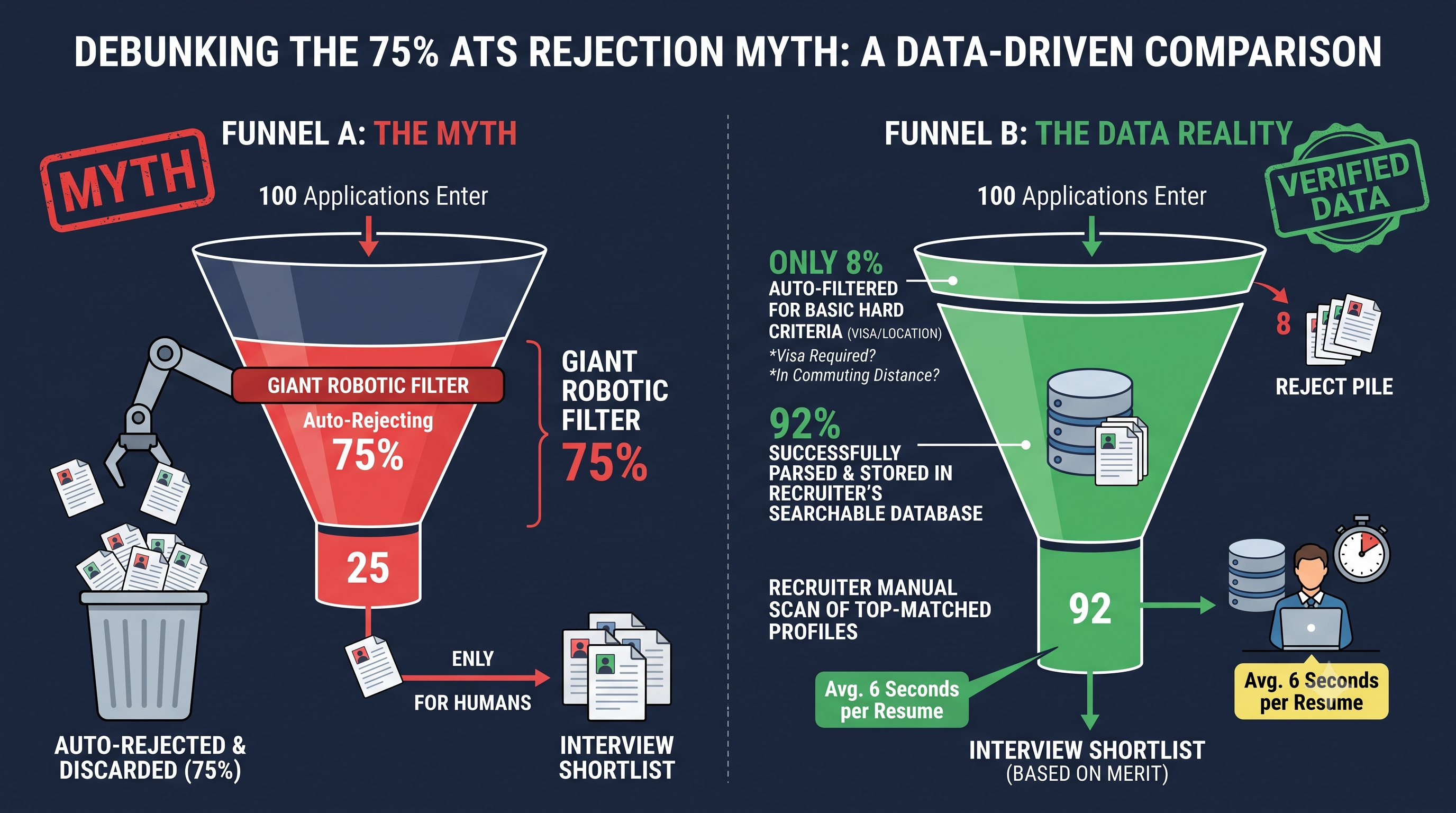
Applicant Tracking Systems (ATS) have become an integral part of the hiring process, with 98% of Fortune 500 companies utilizing them to streamline their recruitment efforts resumeadapter.com. However, there are several misconceptions surrounding ATS, particularly regarding auto-rejection rates. Contrary to popular belief, only 2% of companies auto-reject resumes, while the majority, 92%, use ATS to rank and sort resumes.
The widely cited '75% ATS rejection' figure has been debunked, as it lacks peer-reviewed support and originates from Preptel, a vendor that shut down in 2013 with no published methodology. In reality, real pipeline data reveals that 51% of resumes score below 50/100 on ATS compatibility before optimization. Furthermore, the average resume is missing 52% of keywords in the target job description, even when the candidate is qualified.
To alleviate fears and misconceptions about ATS, it is essential to understand the actual workflow. ATS systems are designed to filter and rank resumes based on specific keywords, qualifications, and experience. They do not automatically reject resumes but rather provide a score or ranking to help recruiters make informed decisions.
The efficacy of a resume in securing callbacks is often gauged by its compatibility with Applicant Tracking Systems (ATS) and its alignment with the job description. A compelling study analyzing 10,000 anonymized resume scans in Q1 2026 reveals that 71.4% of resumes scored below 75 against their target job description, indicating a significant gap in ATS optimization and keyword matching. This finding underscores the critical role of ATS optimization in enhancing callback rates.
The single most common reason for rejection is the absence of exact-match keywords, with 82% of rejected resumes having fewer than 50% of required keywords present, even when the candidate had clear matching experience. This highlights the importance of incorporating relevant keywords from the job description into the resume. AI summary screening layers can mitigate false negatives for well-written but keyword-light resumes but do not eliminate the keyword scoring layer.
A study of 15,000 applications provides valuable insights into the impact of ATS optimization on callback rates. Resumes optimized for ATS compatibility achieve an 11.7% callback rate, compared to just 4.2% for generic resumes. This significant difference underscores the benefits of tailoring resumes to match the requirements of the job posting and optimizing for ATS.
This data suggests that ATS optimization has a substantial impact on callback rates across various industries, with technology and healthcare sectors experiencing the highest callback rates for optimized resumes.
To improve their chances of securing callbacks, job seekers should focus on optimizing their resumes for ATS compatibility and matching the requirements of the job posting. Key strategies include using ATS-friendly formats, quantifying achievements, and incorporating relevant keywords from the job description. By doing so, job seekers can significantly enhance their callback rates and increase their chances of success in the competitive job market.
The notion that Applicant Tracking Systems (ATS) reject up to 75% of resumes has become a pervasive myth in the job search landscape. However, this figure lacks concrete evidence and is often attributed to outdated or discredited sources. Modern ATS systems have evolved significantly, and their functionality is often misunderstood.
The origin of the 75% rejection figure is unclear, but it is essential to note that reputable sources do not support this claim. According to ATS Verification, common ATS myths have been debunked, including the idea that ATS systems auto-reject a large percentage of resumes.
Unlike popular belief, modern ATS systems do not auto-reject resumes. Instead, they rank and filter candidates based on relevance, skills, and experience. The primary goal of an ATS is to streamline the hiring process by identifying top candidates, not to eliminate applicants.
Some job seekers attempt to game the system by stuffing their resumes with keywords or using white text to hide additional keywords. However, these tactics can harm readability and are counterproductive. ATS systems, especially those utilizing AI, prioritize relevance and readability over repetition.
By understanding how ATS systems work and debunking common myths, job seekers can optimize their resumes effectively, increasing their chances of passing through ATS filters and in front of human recruiters.
When it comes to creating an effective resume, Indian freshers often face the challenge of balancing optimization for Applicant Tracking Systems (ATS) with readability and visual appeal. The goal is to ensure that the resume passes through ATS filters while also making a strong impression on human recruiters.
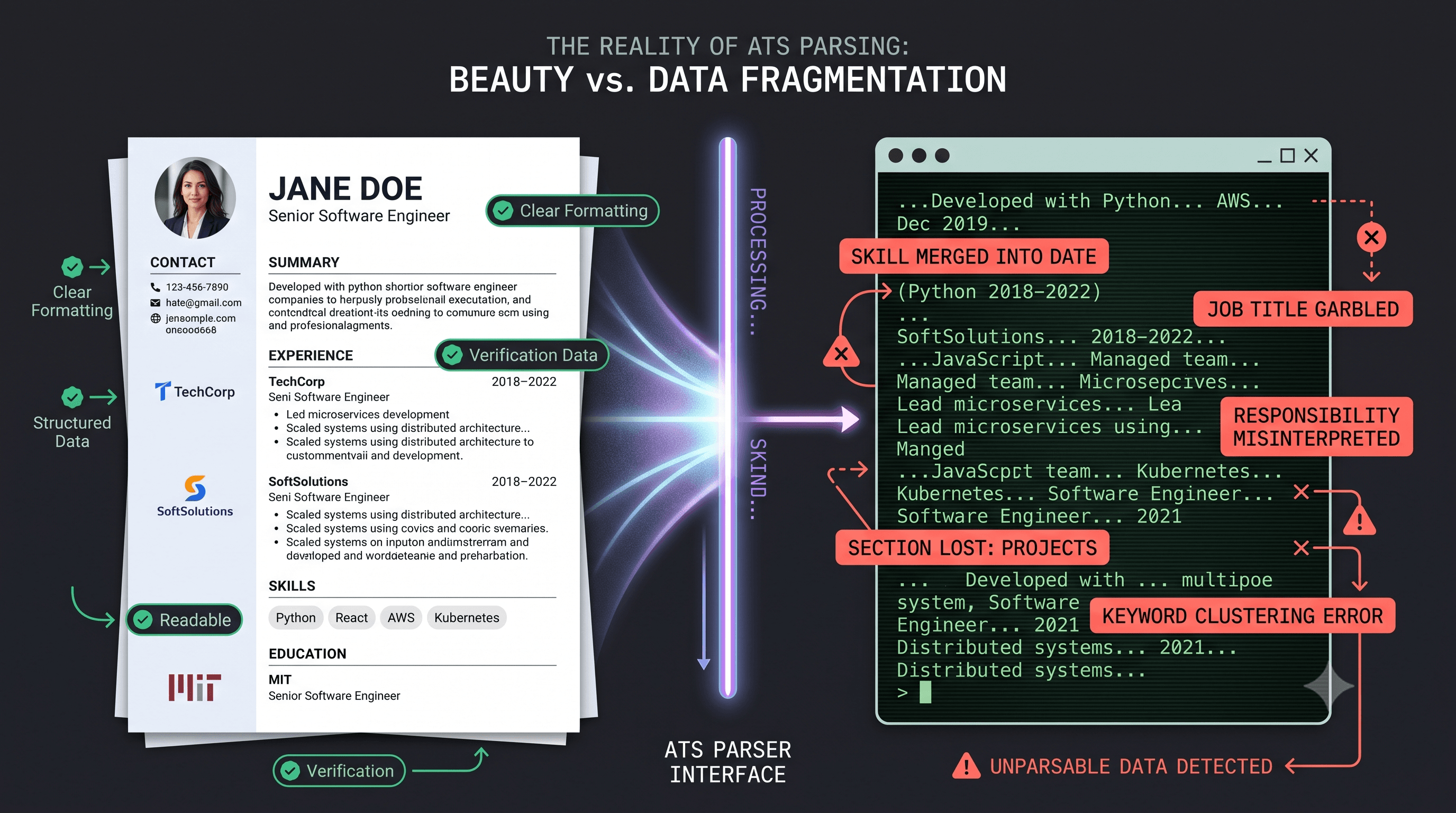
To achieve this balance, it is essential to understand how ATS systems work. ATS systems typically parse text-based information, making it crucial to use clean and standard formatting. Indian freshers can optimize their resumes by using clean text-based PDFs or standard .docx files, which are easily readable by ATS systems.
When it comes to keyword usage, it's essential to match exact keywords from job descriptions naturally. Avoid stuffing the resume with keywords, as this can make it seem spammy. Instead, focus on incorporating relevant keywords in context.
Quantifying achievements is also crucial in making a strong impression on recruiters. Use specific numbers and metrics to demonstrate accomplishments. For example, instead of saying "increased sales," say "increased sales by 25%."
By following these optimization strategies, Indian freshers can create effective resumes that pass through ATS filters while also showcasing their skills and achievements in a clear and readable format.
As job seekers strive to create resumes that pass through Applicant Tracking Systems (ATS) and catch the eye of human recruiters, a delicate balance emerges. Over-optimization for ATS can strip resumes of personality and readability, potentially costing candidates valuable opportunities.
When optimizing for ATS, job seekers often focus on incorporating relevant keywords and formatting that can be easily parsed by software. However, this approach can lead to resumes that appear bland and lack the personal touch that recruiters value. Industry practices suggest that an ATS-optimized resume may include techniques such as using standard font styles, avoiding images and tables, and incorporating keywords from the job description Glassdoor.
The hidden cost of over-optimization is missed opportunities from bland, keyword-stuffed resumes. While these resumes may pass through ATS, they often fail to engage human recruiters. A study highlights the importance of a balance between ATS-friendliness and readability, suggesting that candidates should aim for a resume that is both easily parsed by software and engaging for human readers.
To strike a balance, job seekers should focus on creating ATS-friendly resumes that also showcase their personality and skills. This can be achieved by using clear headings, concise bullet points, and relevant keywords that are integrated naturally into the resume.
By understanding the trade-offs between ATS compliance and human appeal, job seekers can create resumes that effectively navigate both automated and human evaluation processes. Ultimately, the goal is to create a resume that not only passes through ATS but also resonates with human recruiters, increasing the chances of securing an interview.
No. The widely cited “75% ATS rejection” figure has no peer-reviewed support and traces back to a vendor that shut down in 2013. In reality, 98% of Fortune 500 companies use an ATS, but 92% of them do not auto-reject resumes—they rank and sort. Real pipeline data shows 51% of resumes score below 50/100 on ATS compatibility before optimization, but that is a scoring issue, not an automatic rejection.
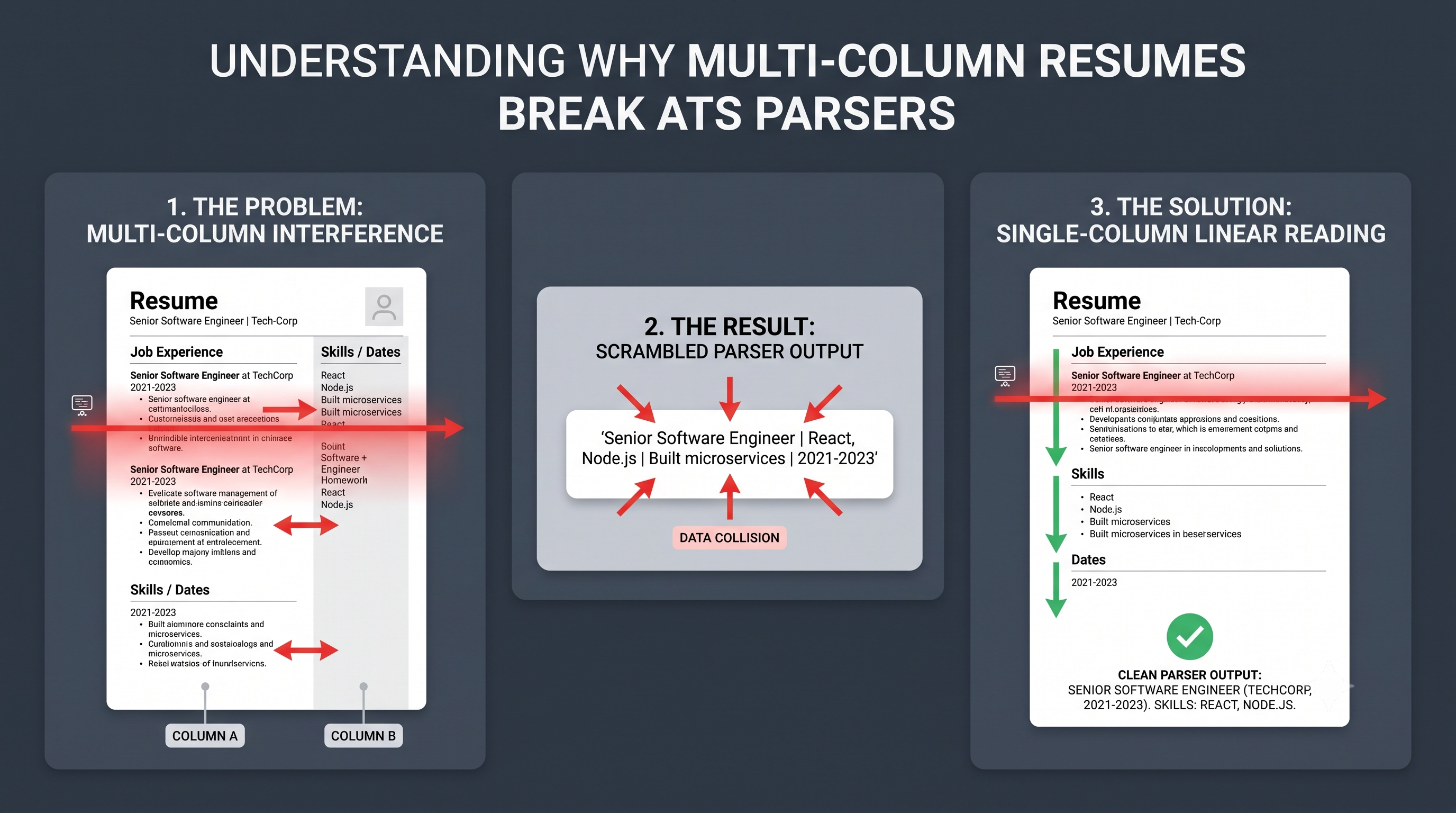
Use a clean, text-based PDF as your default unless the application specifically asks for a .docx file. Modern ATS parsers handle both formats equally well when the file is text-based (exported from a word processor, not a scan). However, complex layouts—multi-column designs, text boxes, images, or tables—cause parsing failures in either format. A single-column, plain-text file with standard fonts (Calibri or Arial, 10–12 pt) and standard section headings parses correctly in both PDF and Word.
Missing exact-match keywords. Analysis of 10,000 resume scans found that 82% of rejected resumes had fewer than 50% of the required keywords from the job description present, even when the candidate had clear matching experience. The average resume is missing 52% of target keywords. Small updates like matching job description keywords, using ATS-friendly formatting, and quantifying achievements can double your callback rate (from 4.2% to 11.7%).
Use a clean single-column layout, standard section headings (e.g. “Professional Experience,” “Education,” “Skills”), and plain bullet points. Avoid tables, text boxes, graphics, icons, headers/footers, and multi-column designs—these cause parsing errors in 28–43% of cases. Incorporate keywords naturally in context rather than stuffing them; modern AI ATS systems prioritize relevance and readability over repetition. This balance keeps your resume both machine-friendly and visually appealing to recruiters.
Discover why recruiters ignore your GitHub link and learn how to transform your profile into a tie-breaker that lands you more interviews.

Discover the three most common resume formatting errors that break ATS parsers and learn how to fix them for better job application success.

Learn the four critical system design mistakes freshers make in interviews and discover structured approaches to ace your next technical interview.


